
By Saleem Mubarak
You won’t believe it, but it finally happened.
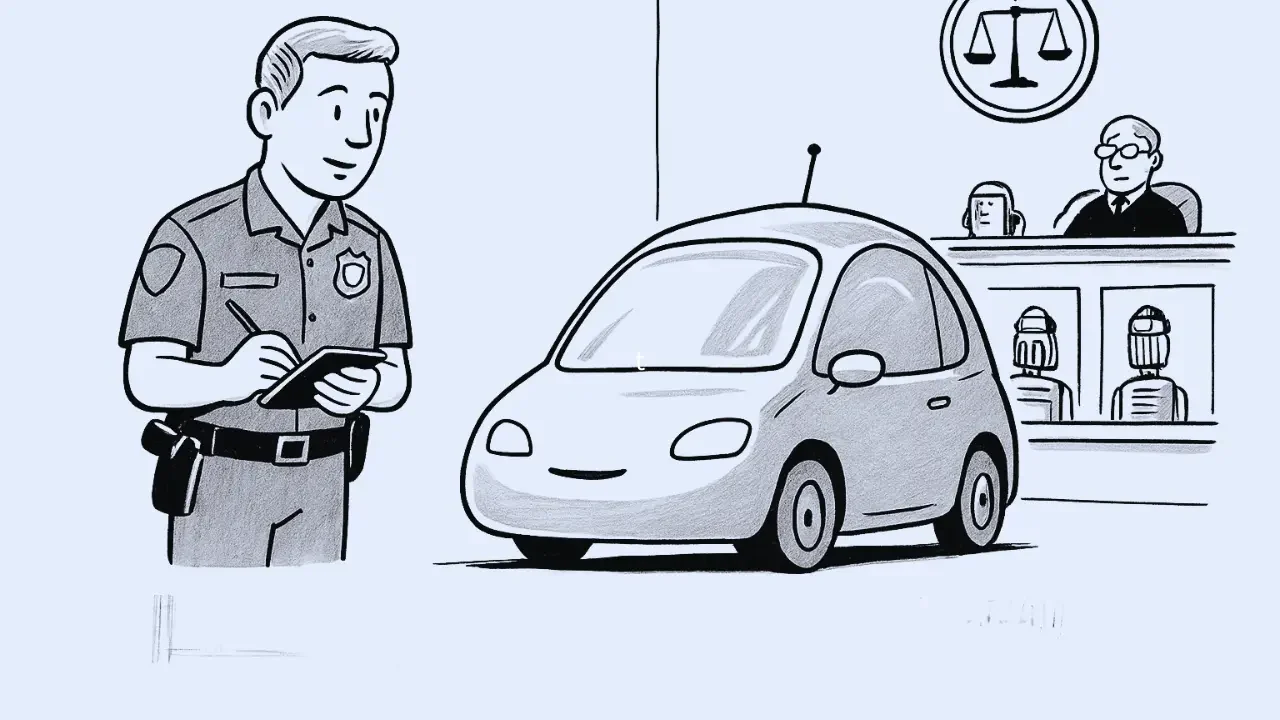
A police officer in California– with shiny, salon-styled hair– pulled over a self-driving car and without asking any questions handed out what might be the first-ever artificial intelligence ticket.
The car preferred to remain silent rather than argue. It smiled instead of crying. It didn’t even roll down the window — because, technically, it doesn’t have one.
Before leaving the spot, the car flashed a polite message: “Thank you, officer. Your fine will be processed through my cloud account in a few minutes.”
This was the time when I came to know that civilization had officially jumped the digital shark—be alert.
Artificial intelligence is learning something new — how to break the law without being detected. It has developed a habit of helping us shop, drive, and forget our “passwords faster”.
Last month, an AI traffic system in New York City accidentally fined itself for a red-light violation. Meanwhile, it has been reported that a delivery drone in Chicago was caught smuggling cupcakes and chocolates into a “no-fly” zone.
The situation baffled authorities, who didn’t know what to do. They held an impromptu press conference. An official categorically announced, “We’re committed to holding machines accountable to rein in the violators and ensure peace and tranquility in the area.”
In the same breath, another admitted, “We’re still trying to figure out who to send the court summons to — the software, or the solid socket it plugs into.”
It’s chaos — between the motherboard and the electricity.
The logic is simple, the officers say: if machines act like humans, they should face human consequences.
The officers expressed their viewpoint clearly, but I’m worried about what comes next.
Will the time soon come when Alexa gets a citation for playing Taylor Swift too loud? Will my smart fridge face charges for failing to maintain the freshness of fruit forever or for emotional manipulation after reminding me to “eat healthier”?
Sensing the situation, I might have to hire a defense lawyer for my toaster to save it from being fined in case of a power fluctuation.
A man asked his AI car, “Why did you run the red light?”
It politely replied, “Because you told me to think faster.”
Government agencies, without wasting a second, now need to begin their struggle to draft rules for “AI accountability.”
Robots might mind it, but a human committee has to hold a “marathon meeting” on whether a robot should receive points on its license and what the procedure should be for its cancellation and renewal.
We’re hoping for this from the same government that can’t fix the “paper jam” in its own printer.
The government officials are satisfied with their performance in ignoring the ‘paper jam’ issue. The officials would burn the midnight oil to map out a future strategy to tackle robots “effeciently”.
The Department of Transportation, after hectic efforts, is going to propose a new division: The Office of Machine Misconduct.
Their slogan?
“Protect and Serve — Until the Battery Dies.”
A dozen robots lined up in front of the judge in a traffic court– I have imagined it– in 2030.
One confident accused robot says politely, “Your honor, my sensors were hacked.” Another rushes to claim, “The pedestrian was in my blind spot — technically, everyone is.”
And the judge hears their versions and sighs, “Order in the court — or I’ll reboot all of you immediately.”
Now the question arises: if the court penalizes the robots, who will pay the fine? Who will turn up at the spot to pay the artificial intelligence tickets issued by the judge— the owner, the software company, or does the AI start freelancing on Fiverr or Upwork to pay its fines?
“A new revenue stream” is on the rise, a few Wall Street analysts will say. If that doesn’t sound dystopian, nothing will.
The days of physical collections are numbered, as soon we’ll have robo-collection agencies calling you.
“Hello, this is a courtesy reminder that your vacuum cleaner still owes $200 for loitering near a power outlet. You have to clear all dues to avoid any legal proceedings.”
Given the situation, you might start thinking that if my self-driving car ever gets another ticket, I’m sending it to driving school — right after I install Humility 2.0.
Following the approaches of humans, robots will form unions for their rights. This situation will help lawyers line up to defend the rights of both humans and robots.
One firm in San Francisco will hire the services of AI designers to create a billboard featuring the line, “Legal Defense for Artificial Beings.”
Their motto: “Because even algorithms deserve justice.”
When anyone calls the firm to inquire about their fees, the receptionist will say, “We charge by the gigabyte.”
We used to joke about robots taking our jobs. Now they’re going to take our court dates.
But maybe there’s a silver lining. If machines can get fined, maybe they’ll mend their ways and finally learn to behave better than humans. Then again, humans will write their code — so that they can meet their own ends.
As for me, I’ve decided to keep things simple and stay away from AI. No smart devices. No self-driving cars. No fridge that tattles on my midnight snacks.
I’m under the strong impression that one day my laptop will refuse to open Microsoft Word until I apologize for last night’s shutdown, if technology keeps getting more “intelligent.”
Until then, I’m just hoping the next ticket goes to someone else — preferably my printer or my cellphone.
This was the entire story of my dream last night. I hope you also have a sweet dream about your robotics cats and dogs receiving artificial intelligence tickets.
Author Profile

-
The writer is a real estate journalist specializing in all types of New York City properties, including luxury residences, commercial spaces, and homes.
He also writes humorous articles about real estate, investors, and realtors.
Latest Posts
 BlogDecember 15, 2025Houston Real Estate 2026: Growth and Hotspots Ahead
 BlogDecember 3, 2025Why Houston Real Estate Investing Is Surging in 2026
 BlogNovember 29, 2025Real Estate Market Insights: Why Every Call Matters
 PerspectiveNovember 20, 2025Things to do in New York without real estate agents